
Why Solar Panel Demand Is Exploding in 2026
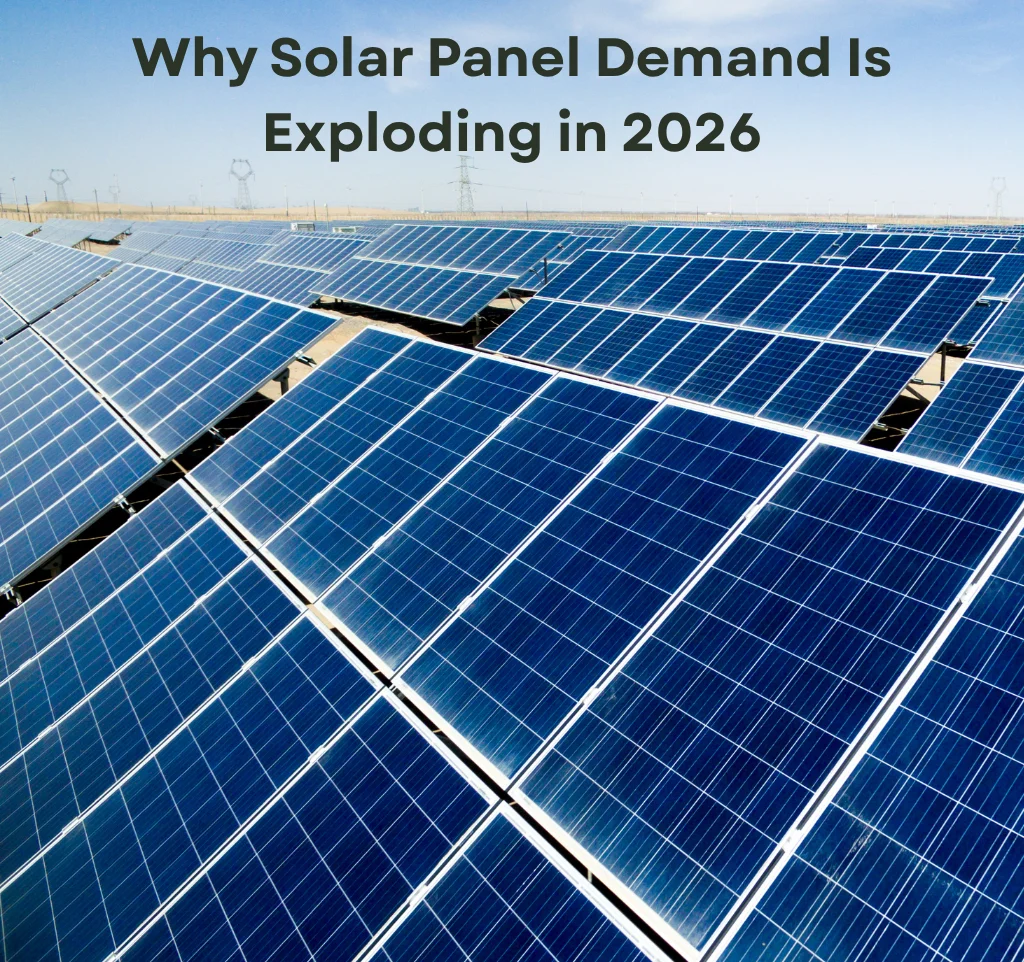
If you’ve noticed more homes in your neighborhood installing solar panels lately, you’re not imagining it. In 2026, solar energy isn’t just a trend—it’s becoming a mainstream choice for homeowners, businesses, and even renters. What was once considered an expensive, long-term investment is now seen as a smart, practical move. So, what’s really driving this sudden surge in solar panel demand? Let’s break it down.
The Rising Cost of Electricity Is Forcing People to Rethink
One of the biggest reasons behind the solar boom is simple: electricity bills are getting out of control.
Across many regions, energy prices have been steadily climbing due to increased demand, supply chain issues, and reliance on traditional power sources. For the average household, this means higher monthly expenses with no real control. Solar panels offer something people are desperately looking for—predictability. Once installed, your energy costs become far more stable, and in many cases, dramatically lower. Over time, this shift from “paying the utility forever” to “owning your power” is a powerful motivator.
Solar Has Become More Affordable Than Ever
A few years ago, the biggest barrier to going solar was cost. That’s no longer the case.
Advancements in manufacturing and increased global competition have significantly reduced the price of solar panels and installation. On top of that, financing options have improved. Many providers now offer:
- Zero upfront cost installations
- Monthly payment plans
- Leasing options
This means homeowners no longer need a large upfront investment to switch to solar. For many, the monthly solar payment is actually lower than their existing electricity bill, making it an easy decision.
Government Incentives Are Fueling Adoption
Governments around the world are actively encouraging solar adoption, and 2026 is seeing some of the strongest support yet.
Incentives like tax credits, rebates, and subsidies can cover a significant portion of installation costs. In some areas, homeowners can even sell excess energy back to the grid, creating an additional source of income.
These policies aren’t just helpful—they’re accelerating the shift toward renewable energy by making solar financially attractive for everyday people.
Energy Independence Is Becoming a Priority
Recent global events have made one thing clear: relying entirely on external energy sources can be risky.
Power outages, grid instability, and energy shortages have pushed many homeowners to look for alternatives. Solar panels, especially when paired with battery storage, offer a level of independence that traditional systems simply can’t match.
People are no longer just thinking about saving money—they’re thinking about security and control. Having your own power source means you’re less vulnerable to blackouts and rising prices.
Technology Has Improved Dramatically
Solar technology in 2026 is far more advanced than it was even five years ago.
Today’s panels are:
- More efficient (producing more power in less space)
- More durable (lasting 25+ years)
- More aesthetically pleasing (sleeker designs)
In addition, smart energy systems now allow homeowners to monitor and optimize their energy usage in real time. This level of control makes solar not just a utility upgrade, but a lifestyle upgrade.
Environmental Awareness Is at an All-Time High
Climate change is no longer a distant concern—it’s something people are experiencing firsthand. From extreme weather to rising temperatures, the impact is hard to ignore.
As a result, more individuals are making conscious choices to reduce their carbon footprint. Solar energy is one of the most effective ways to do that.
Switching to solar isn’t just about saving money—it’s about contributing to a cleaner, more sustainable future. And for many buyers, that matters just as much as the financial benefits.
Solar Is No Longer Just for Homeowners
Another major shift in 2026 is accessibility.
Solar solutions are no longer limited to people who own houses. New options like:
- Portable solar systems
- Plug-and-play panels
- Community solar programs
have opened the door for renters and apartment dwellers to participate in the solar movement.
This expansion of the market is a huge reason why demand is growing so rapidly.
The Social Effect: Everyone Is Doing It
There’s also a psychological factor at play.
As more people install solar panels, it becomes more visible—and more normalized. Neighbors influence neighbors. Once a few homes in an area go solar, others start to follow.
This “snowball effect” is accelerating adoption faster than ever before.